
 论文降重
 免费查重
- 钛学术文献服务平台 \
- 学术期刊 \
- 科教文艺期刊 \
- 科研管理期刊 \
- 国家科学评论(英文版)期刊 \
null
Quantum supremacy: some fundamental concepts
基本信息来源于合作网站,原文需代理用户跳转至来源网站获取
摘要:
Quantum computation was envisioned by Feynman as a valuable means of solving quantum problems [1].The question is,how do we prove the superiority of quantum computing over classical devices? A common misconception in describing the power of a quantum computer over a classical computer is that quantum bits can be prepared in a superposition of an exponential number of states,which cannot be achieved with classical bits.This statement is certainly true,but it does not tell us,specifically,what problems quantum computers can efficiently solve while classical computers fail to do so.In fact,based exactly on the technique of Feynman's path integral,the output (i.e.transition amplitude) of any quantum circuit can be calculated classically with a polynomial amount of memory (although the temporal cost would be exponential).Therefore any quantum computation can be simulated classically;the key question is about the efficiency.



推荐文章
期刊_丙丁烷TDLAS测量系统的吸收峰自动检测
带间级联激光器
调谐半导体激光吸收光谱
雾剂检漏 中红外吸收峰 洛伦兹光谱线型
不同盐度、温度及光照对漂浮浒苔生理生态的影响
浒苔
盐度
温度
光照
生理生态
期刊_联合空间信息的改进低秩稀疏矩阵分解的高光谱异常目标检测
高光谱图像
异常目标检测 低秩稀疏矩阵分解 稀疏矩阵 残差矩阵
内容分析
关键词云
关键词热度
相关文献总数
(/次)
(/年)
文献信息
| 篇名 | Quantum supremacy: some fundamental concepts | ||
| 来源期刊 | 国家科学评论(英文版) | 学科 | |
| 关键词 | |||
| 年,卷(期) | 2019,(1) | 所属期刊栏目 | |
| 研究方向 | 页码范围 | 22-23 | |
| 页数 | 2页 | 分类号 | |
| 字数 | 语种 | 英文 | |
| DOI | 10.1093/nsr/nwy072 | ||
五维指标

引文网络
引文网络
二级参考文献 (0)
共引文献 (0)
参考文献 (0)
节点文献
引证文献 (0)
同被引文献 (0)
二级引证文献 (0)
2019(0)
- 参考文献(0)
- 二级参考文献(0)
- 引证文献(0)
- 二级引证文献(0)
引文网络交叉学科

相关学者/机构
期刊影响力
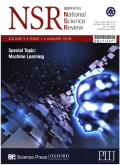
国家科学评论(英文版)
主办单位:
中国科技出版传媒股份有限公司
出版周期:
月刊
ISSN:
2095-5138
CN:
10-1088/N
开本:
大16开
出版地:
北京市
邮发代号:
80-671
创刊时间:
2014
语种:
eng
出版文献量(篇)
773
总下载数(次)
0
期刊文献
相关文献
推荐文献


