
 论文降重
 免费查重
- 钛学术文献服务平台 \
- 学术期刊 \
- 医药卫生期刊 \
- 中国医学期刊 \
- 中草药(英文版)期刊 \
Molecular mechanism of Chuanxiong Rhizoma in treating coronary artery diseases
Molecular mechanism of Chuanxiong Rhizoma in treating coronary artery diseases
基本信息来源于合作网站,原文需代理用户跳转至来源网站获取
摘要:
Objective:Most of the studies on the herb Chuanxiong Rhizoma(CR)have focused on the L-arginine-nitric oxide(NO)pathway,but the nitrate-nitrite-NO(NO3-NO2-NO)pathway was rarely investigated.Therefore,the aim of this study was to evaluate the effects and mechanisms of action of CR in coronary artery disease(CAD).Methods:The NO3-,NO2-and NO levels were examined in the NO3-NO2-NO pathway.High-performance ion chromatography was used to quantify NO3-and NO2-levels.Then,NO was quantified using a multi-functional enzyme marker with a fluorescent probe.The tension of aortic rings was measured using a multi myograph system.Results:High content of NO3-and low content of NO2-was found in CR,and which could potently convert NO3-to NO2-in the presence of endogenous reductase enzyme.Incubating human coronary artery endothelial cells(HCAECs)with CR-containing serum showed that CR significantly decreased the NO3-content and increased the levels of NO2-and NO in the cells under hypoxic conditions.In addition,CR sig-nificantly relaxed isolated aortic rings when the i-arginine-NO pathway was blocked.The optimal con-centration of CR for relaxation was 200 mg/mL.Conclusion:CR supplements large amounts of NO in cells and vessels to achieve relaxation via the NO3-NO2-NO pathway,thereby making up for the deficiency caused by the lack of NO after the L-arginine-NO pathway is suppressed.This study also supports the potential use of a traditional Chinese herb for future drug development.


推荐文章
Mechanism of accelerated dissolution of mineral crystals by cavitation erosion
Cavitation erosion
Mineral dissolution
Plastic deformation
Stepwave
Gibbs free energy
Isotherm and kinetic studies on the adsorption of humic acid molecular size fractions onto clay mine
Kaolinite
Montmorillonite
Leonardite humic acid
Humic acid fractions
Kinetics
Equilibrium
An EXAFS investigation of the mechanism of competitive sorption between Co(Ⅱ) and Ni(Ⅱ) at γ-alumi
Co(Ⅱ)
Ni(Ⅱ)
γ-Al2O3
Competitive sorption
EXAFS
内容分析
关键词云
关键词热度
相关文献总数
(/次)
(/年)

引文网络
引文网络
二级参考文献 (0)
共引文献 (0)
参考文献 (35)
节点文献
引证文献 (0)
同被引文献 (0)
二级引证文献 (0)
1995(1)
- 参考文献(1)
- 二级参考文献(0)
2004(2)
- 参考文献(2)
- 二级参考文献(0)
2005(1)
- 参考文献(1)
- 二级参考文献(0)
2007(3)
- 参考文献(3)
- 二级参考文献(0)
2008(2)
- 参考文献(2)
- 二级参考文献(0)
2009(4)
- 参考文献(4)
- 二级参考文献(0)
2011(1)
- 参考文献(1)
- 二级参考文献(0)
2012(2)
- 参考文献(2)
- 二级参考文献(0)
2014(3)
- 参考文献(3)
- 二级参考文献(0)
2015(2)
- 参考文献(2)
- 二级参考文献(0)
2016(5)
- 参考文献(5)
- 二级参考文献(0)
2018(4)
- 参考文献(4)
- 二级参考文献(0)
2019(5)
- 参考文献(5)
- 二级参考文献(0)
2021(0)
- 参考文献(0)
- 二级参考文献(0)
- 引证文献(0)
- 二级引证文献(0)
引文网络交叉学科

相关学者/机构
期刊影响力
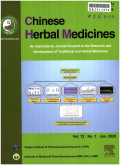
中草药(英文版)
主办单位:
天津药物研究院
中国医学科学院药用植物研究所
出版周期:
季刊
ISSN:
1674-6384
CN:
12-1410/R
开本:
16开
出版地:
天津市南开区鞍山西道308号
邮发代号:
创刊时间:
2009
语种:
eng
出版文献量(篇)
697
总下载数(次)
0
期刊文献
相关文献
推荐文献


