
 论文降重
 免费查重
- 钛学术文献服务平台 \
- 学术期刊 \
- 工业技术期刊 \
- 化学工业期刊 \
- 中国化学工程学报(英文版)期刊 \
Separation of As and Bi and enrichment of As, Cu, and Zn from copper dust using an oxidation-leaching approach
Separation of As and Bi and enrichment of As, Cu, and Zn from copper dust using an oxidation-leaching approach
基本信息来源于合作网站,原文需代理用户跳转至来源网站获取
摘要:
Copper dust with high arsenic content is a hazardous waste that should be treated properly. Herein, the copper dust is oxidized, leached, and separated at room temperature and atmospheric pressure. To sep-arate As and Bi, part of As(III) in copper dust is oxidized to As(V), so that most of the As, Cu, and Zn ele-ments enter the solution and the Bi remains in the leaching residue. Also, the influence of several factors, such as H2SO4 dosage, H2O2 dosage, liquid–solid ratio, leaching temperature and leaching time, on the leaching percentage of As, Bi, Cu, and Zn is systematically investigated. The optimal conditions are obtained as follows: liquid–solid ratio of 3:1, H2O2 dosage of 10 ml/50 g (dust), H2SO4 dosage of 4.5 ml/50 g (dust), leaching temperature of 85 ?C, and leaching time of 3 h. Under these conditions, the leaching percentage of As, Cu, Zn, and Bi is found to be 97.39%, 96.11%, 97.32%, and 2.40%, respec-tively. For further recovery of As from the leaching solution, the one-step recycle leaching of the leaching solution is performed to increase the concentration of As in the recycled leaching solution. The concen-tration of arsenic in the recycling leaching solution is found to be 79.63 g?L–1, which is beneficial for the study on further recovery of As2O3.


推荐文章
Using electrogeochemical approach to explore buried gold deposits in an alpine meadow-covered area
Electrogeochemistry
Buried mineral deposit
Ideal anomaly model
Alpine-meadow covered
Ihunze
Enrichment characteristics and risk assessment of Hg in bird feathers from Caohai wetland in Guizhou
Caohai wetland
Total Hg
Methyl Hg
Bird feathers
Re-Os dating of molybdenite and in-situ Pb isotopes of sulfides from the Lamo Zn-Cu deposit in the D
Molybdenite Re-Os dating
In-situ lead isotopes
Skarn deposit
Dachang
Ore genesis of Badi copper deposit, northwest Yunnan Province, China: evidence from geology, fluid i
Badi copper deposit
Fluid inclusion
Sulfur isotope
Hydrogen and oxygen isotope
Ore genesis
内容分析
关键词云
关键词热度
相关文献总数
(/次)
(/年)
文献信息
| 篇名 | Separation of As and Bi and enrichment of As, Cu, and Zn from copper dust using an oxidation-leaching approach | ||
| 来源期刊 | 中国化学工程学报(英文版) | 学科 | |
| 关键词 | |||
| 年,卷(期) | 2021,(5) | 所属期刊栏目 | Separation Science and Engineering |
| 研究方向 | 页码范围 | 125-131 | |
| 页数 | 7页 | 分类号 | |
| 字数 | 语种 | 英文 | |
| DOI | |||
五维指标

引文网络
引文网络
二级参考文献 (127)
共引文献 (4)
参考文献 (22)
节点文献
引证文献 (0)
同被引文献 (0)
二级引证文献 (0)
1930(1)
- 参考文献(0)
- 二级参考文献(1)
1949(1)
- 参考文献(0)
- 二级参考文献(1)
1958(1)
- 参考文献(0)
- 二级参考文献(1)
1979(1)
- 参考文献(0)
- 二级参考文献(1)
1980(1)
- 参考文献(0)
- 二级参考文献(1)
1981(1)
- 参考文献(0)
- 二级参考文献(1)
1982(1)
- 参考文献(0)
- 二级参考文献(1)
1985(1)
- 参考文献(0)
- 二级参考文献(1)
1991(1)
- 参考文献(0)
- 二级参考文献(1)
1994(2)
- 参考文献(0)
- 二级参考文献(2)
1995(1)
- 参考文献(0)
- 二级参考文献(1)
1996(2)
- 参考文献(0)
- 二级参考文献(2)
1999(3)
- 参考文献(1)
- 二级参考文献(2)
2000(4)
- 参考文献(0)
- 二级参考文献(4)
2001(2)
- 参考文献(0)
- 二级参考文献(2)
2002(1)
- 参考文献(0)
- 二级参考文献(1)
2003(5)
- 参考文献(0)
- 二级参考文献(5)
2004(3)
- 参考文献(0)
- 二级参考文献(3)
2005(3)
- 参考文献(0)
- 二级参考文献(3)
2006(3)
- 参考文献(0)
- 二级参考文献(3)
2008(3)
- 参考文献(0)
- 二级参考文献(3)
2009(4)
- 参考文献(1)
- 二级参考文献(3)
2010(10)
- 参考文献(1)
- 二级参考文献(9)
2011(7)
- 参考文献(0)
- 二级参考文献(7)
2012(13)
- 参考文献(1)
- 二级参考文献(12)
2013(5)
- 参考文献(0)
- 二级参考文献(5)
2014(9)
- 参考文献(0)
- 二级参考文献(9)
2015(16)
- 参考文献(1)
- 二级参考文献(15)
2016(15)
- 参考文献(2)
- 二级参考文献(13)
2017(12)
- 参考文献(3)
- 二级参考文献(9)
2018(10)
- 参考文献(6)
- 二级参考文献(4)
2019(7)
- 参考文献(6)
- 二级参考文献(1)
2021(0)
- 参考文献(0)
- 二级参考文献(0)
- 引证文献(0)
- 二级引证文献(0)
引文网络交叉学科

相关学者/机构
期刊影响力
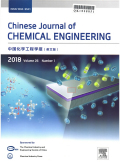
中国化学工程学报(英文版)
主办单位:
中国化工学会
出版周期:
月刊
ISSN:
1004-9541
CN:
11-3270/TQ
开本:
大16开
出版地:
北京东城区青年湖南街13号
邮发代号:
80-448
创刊时间:
1982
语种:
eng
出版文献量(篇)
4237
总下载数(次)
1
期刊文献
相关文献
推荐文献


- 期刊分类
- 期刊(年)
- 期刊(期)
- 期刊推荐
一般工业技术
交通运输
军事科技
冶金工业
动力工程
化学工业
原子能技术
大学学报
建筑科学
无线电电子学与电信技术
机械与仪表工业
水利工程
环境科学与安全科学
电工技术
石油与天然气工业
矿业工程
自动化技术与计算机技术
航空航天
轻工业与手工业
金属学与金属工艺
中国化学工程学报(英文版)2022
中国化学工程学报(英文版)2021
中国化学工程学报(英文版)2020
中国化学工程学报(英文版)2019
中国化学工程学报(英文版)2018
中国化学工程学报(英文版)2017
中国化学工程学报(英文版)2016
中国化学工程学报(英文版)2015
中国化学工程学报(英文版)2014
中国化学工程学报(英文版)2013
中国化学工程学报(英文版)2012
中国化学工程学报(英文版)2011
中国化学工程学报(英文版)2010
中国化学工程学报(英文版)2009
中国化学工程学报(英文版)2008
中国化学工程学报(英文版)2007
中国化学工程学报(英文版)2006
中国化学工程学报(英文版)2005
中国化学工程学报(英文版)2004
中国化学工程学报(英文版)2003
中国化学工程学报(英文版)2002
中国化学工程学报(英文版)2001
中国化学工程学报(英文版)2000
中国化学工程学报(英文版)1999
中国化学工程学报(英文版)1998
中国化学工程学报(英文版)2021年第9期
中国化学工程学报(英文版)2021年第8期
中国化学工程学报(英文版)2021年第7期
中国化学工程学报(英文版)2021年第6期
中国化学工程学报(英文版)2021年第5期
中国化学工程学报(英文版)2021年第4期
中国化学工程学报(英文版)2021年第3期
中国化学工程学报(英文版)2021年第2期
中国化学工程学报(英文版)2021年第12期
中国化学工程学报(英文版)2021年第1期


